Fungus Gnats: PGC Best Practices
Tiny Space Invaders:
Anyone with indoor plants has been here before.
You’ve been taking the BEST care of your house or office plant, but lately you’ve noticed some tiny flying bugs while watering. Now there’s more than one, tiny spacy floating blurry black spots. You’ve got fungus gnats - tiny flies (similar to fruit flies) that live in house plants!
Before you call the fumigator, we’ve got great news about these pests! They are tiny, gross & annoying, but are unlikely to take down your plant babies.
Fungus gnats grow and live in moist conditions and feed on organic matter in the soil– sometimes roots, but mostly detritus (dead peat moss or other non-living organic material).
Very often fungus gnats will hunker down in potted plants with leaves close to the soil, providing a moist microclimate– african violet, philodendron, peace lily, pilea, for example.
They live in the top ¼” inch to inch of soil and typically only “fly” when there is moisture.
Adults lay eggs in wet soil. When conditions are right, tiny white larvae emerge and search for a smörgåsbord of dead organic material in the first inch of soil in the pot. Once the babies have had their fill, they pupate & winged adults emerge to live for up to 7 days.
Our favorite tips for fighting the gnats:
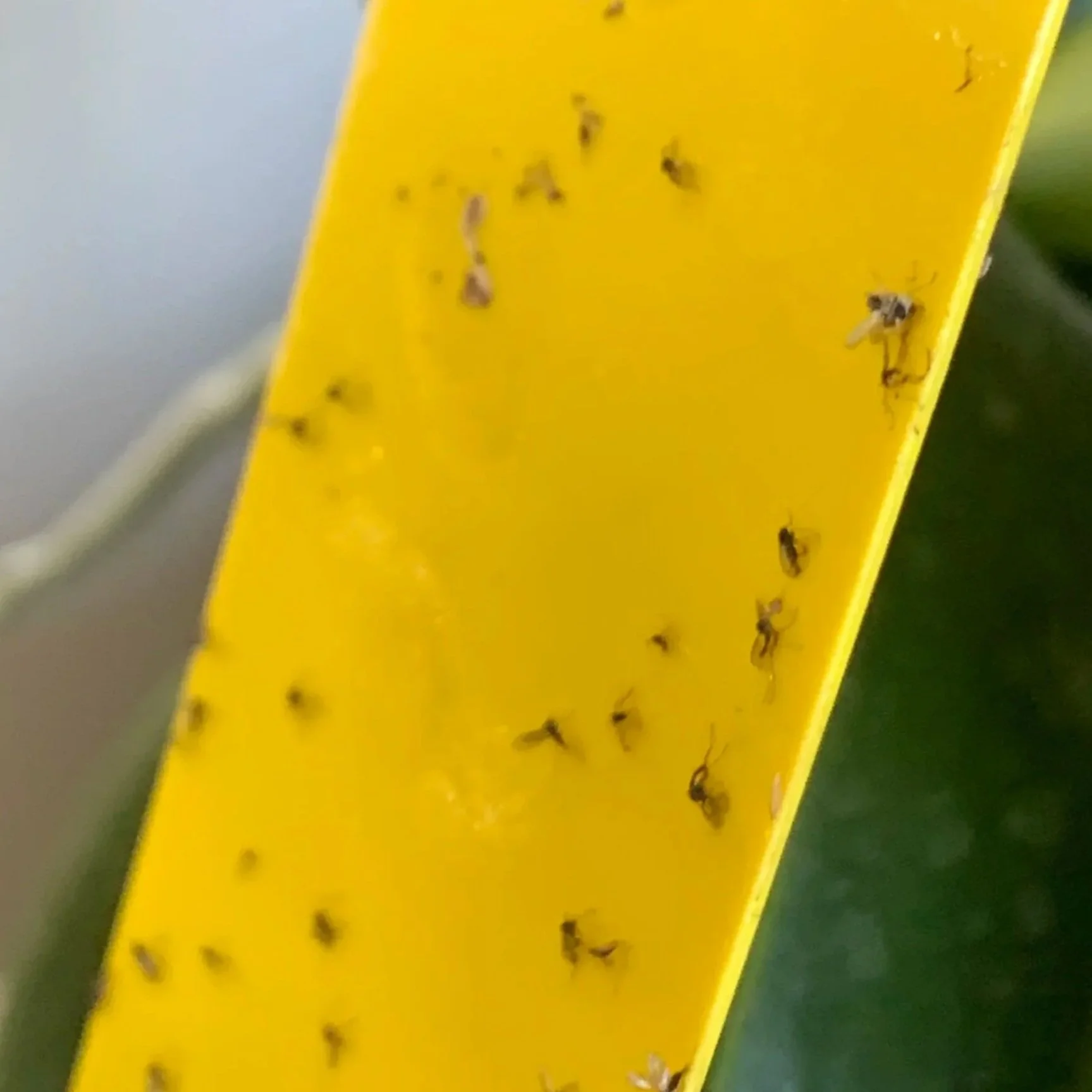
Break the cycle early at the adult stage.
If you see even one of those buggers, use sticky traps to maintain a low population.
Break the cycle early at the adult stage (preventing them from laying more eggs). If you see even one of those buggers, use sticky traps to maintain a low population. Also, you can use a fan to dry the top ¼” of soil quickly to prevent adults from flying.
The next step (especially if you have a larger population of floating space cadets) is to allow the top inch of your plants to completely dry between waterings. When you do water, if you suspect fungus gnats might be present, try bottom watering. Place the plant in a tray or dish and add water to the dish. Let sit for 15-20 minutes then remove. Bottom watering prevents eggs from receiving the moisture they need to hatch. If watering from the top, you must let the top inch of soil dry out.
Most effective battle plan: For large infestations, we recommend removing the top inch of soil & top dress with “fresh” soil or sanitized soil (microwave 1 cup soil for 30-60 seconds) or put a sheet pan of soil in the oven at 175° for 20 minutes. Let cool & use as top-dressing. And, maybe label your sheet pan “for soil only” before you put it away. Low peat soils discourage fungus gnats. Read the contents of the potting soil you are using & avoid peat heavy soils (save the planet while you’re at it).
Organic & Chemical Controls:
When all else fails, bring on the chemicals!
We have had success with a “soil drench”. Use 3% hydrogen peroxide and soak all around the top 1/2 inch of soil with a light watering can or sprayer. This technique is very different from watering. Instead of soaking all of the soil in the container, aim for surface area on top of the soil. We have a few staff that swear by this method!
Try some worms - Nematodes are available at most local plant stores. They come refrigerated & you mix with water to create an inoculate for the soil. These beneficial microscopic animals dine on both eggs and pupae of the gnats and are innocuous to plants, humans and four legged creatures.
BT (Bacillus thuringiensis israelensis) can eradicate gnats. BT is another organic control, a bacteria specializing in disrupting the life cycle of fungus gnats at the egg and pupae stages. Also known by brand name “Mosquito Bits”. BT are available in USA, but not every country has passed regulations on this newer control. BT is also shown to be harmless to humans & their four-legged friends.
Good Luck on your journey:
As usual, we like to recommend scaled options depending on the severity of the infestation. It all depends on what you want to practice in your house & whether a few floating spaced-out flies are ok for you to have around, or if you need OCD levels of eradication.
There are plenty of holistic and effective options that are not icky for you or the environment, as long as you label your soil sterilizing sheet pan - “For Soil Only”
Oh, yeah, you also may want one of these cool butterworts - just as back up.
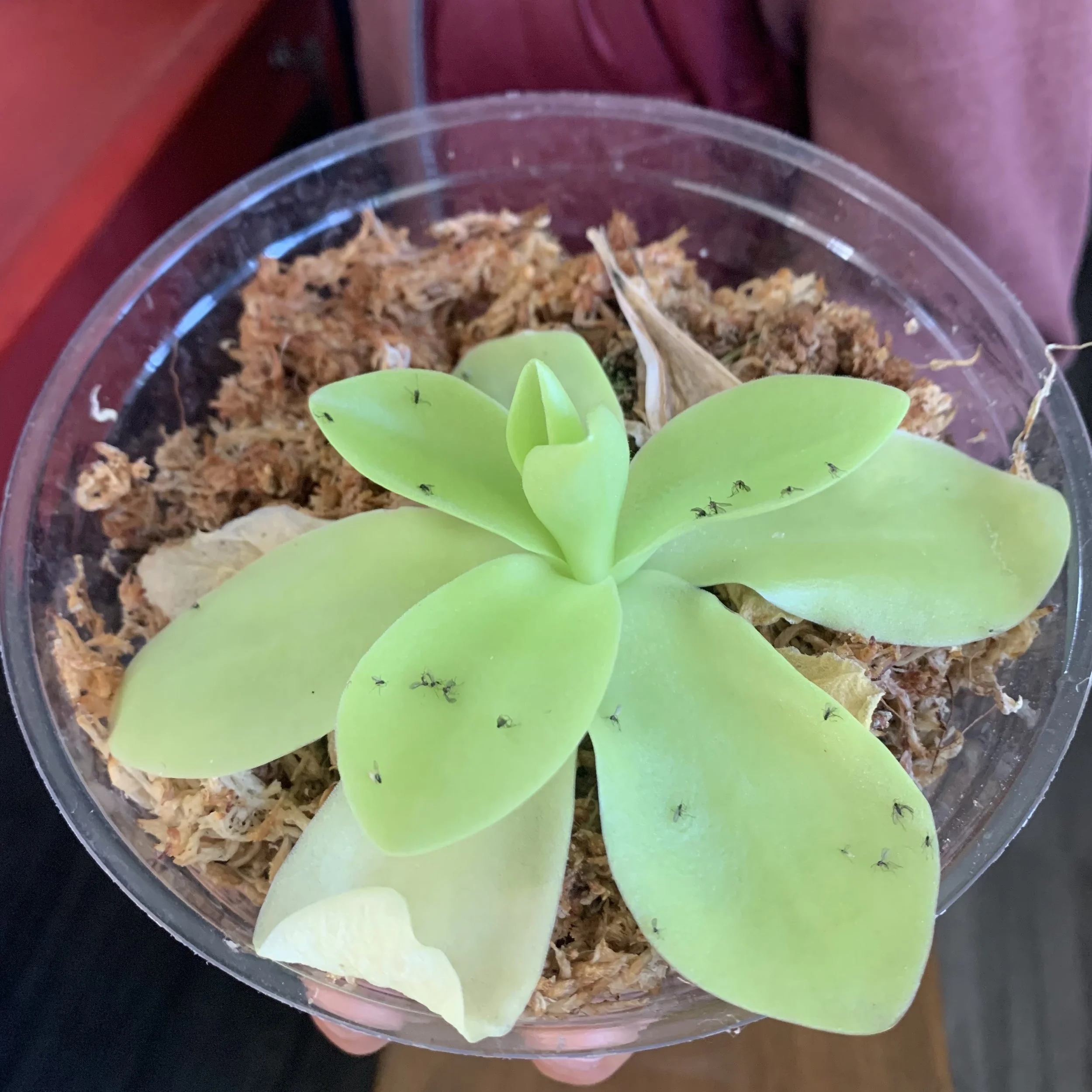
Fungus gnats:
Kill ‘em ALL with a butterwort!
